In April, I spent a few days in Paris with a couple of designer friends and there was one thing we were most excited to do: the fleas! As someone who loves to travel and does a lot of research before going anywhere, this is everything I wish someone had told me before I went.
Which Market You're Actually Looking For
The complex is called Marché aux Puces de Saint-Ouen, just north of the city near the Porte de Clignancourt metro stop. However, I do suggest you Uber there. What you need to know is that it's not one market, it's several, and they feel completely different from each other.
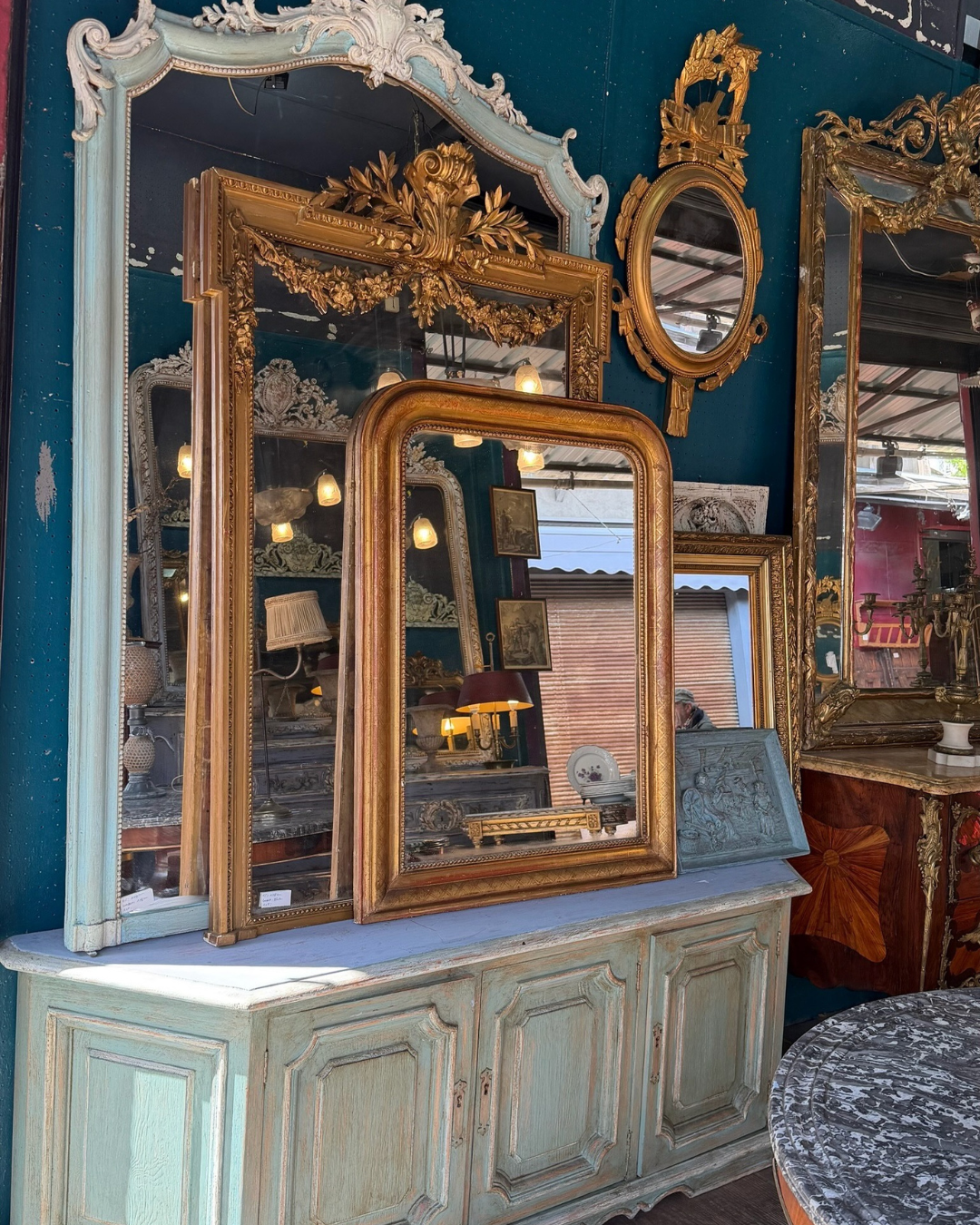
Some of the markets inside are beautiful, almost like walking through a gallery. The stalls are polished, the dealers are knowledgeable, and the prices reflect all of that (though negotiating is totally normal and they're open to it). Incredible to browse, and the vendors will wrap your purchases beautifully. Worth going through even if you're not buying. This is also where the shippers are located, which makes coordinating logistics for larger pieces much easier than you'd expect. More on that below.
More Polished Storefront Style
Marché Biron: probably the most upscale, lots of 18th-century furniture, chandeliers, fine antiques
Paul Bert Serpette (two adjoining markets, Paul Bert and Serpette): the design-world favorite, where decorators and celebrities shop; mid-century and 20th-century design especially
Marché Dauphine: large covered market, good mix of antiques, books, vintage fashion; this is also where shipping/freight services tend to cluster
More Casual Stalls/Tables
Marché Jules Vallès: a casual feel, smaller dealers, better odds of a bargain
Marché Vernaison: the oldest market, charming combination of small stalls
The street vendors along Rue des Rosiers also have that casual but charming vibe
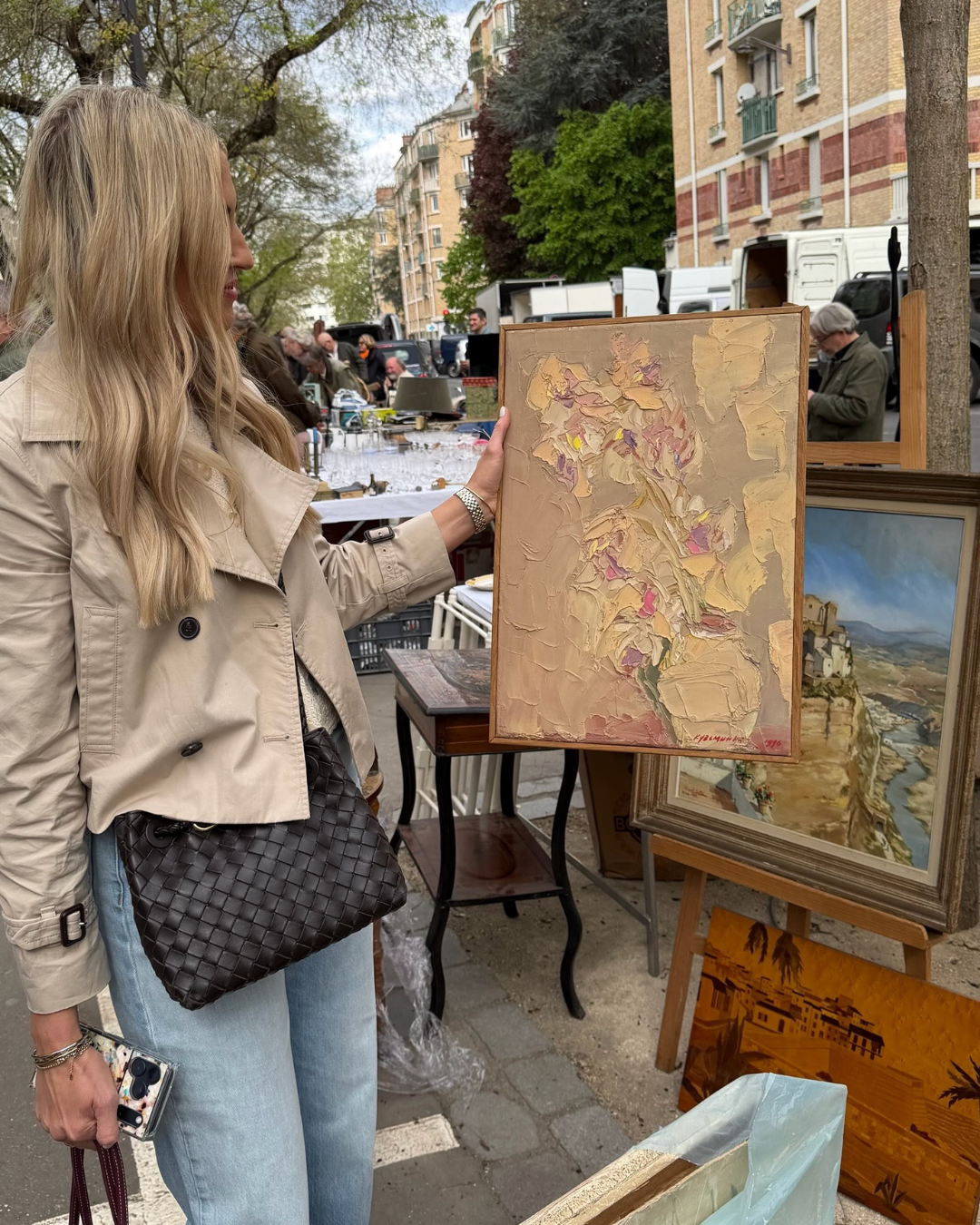
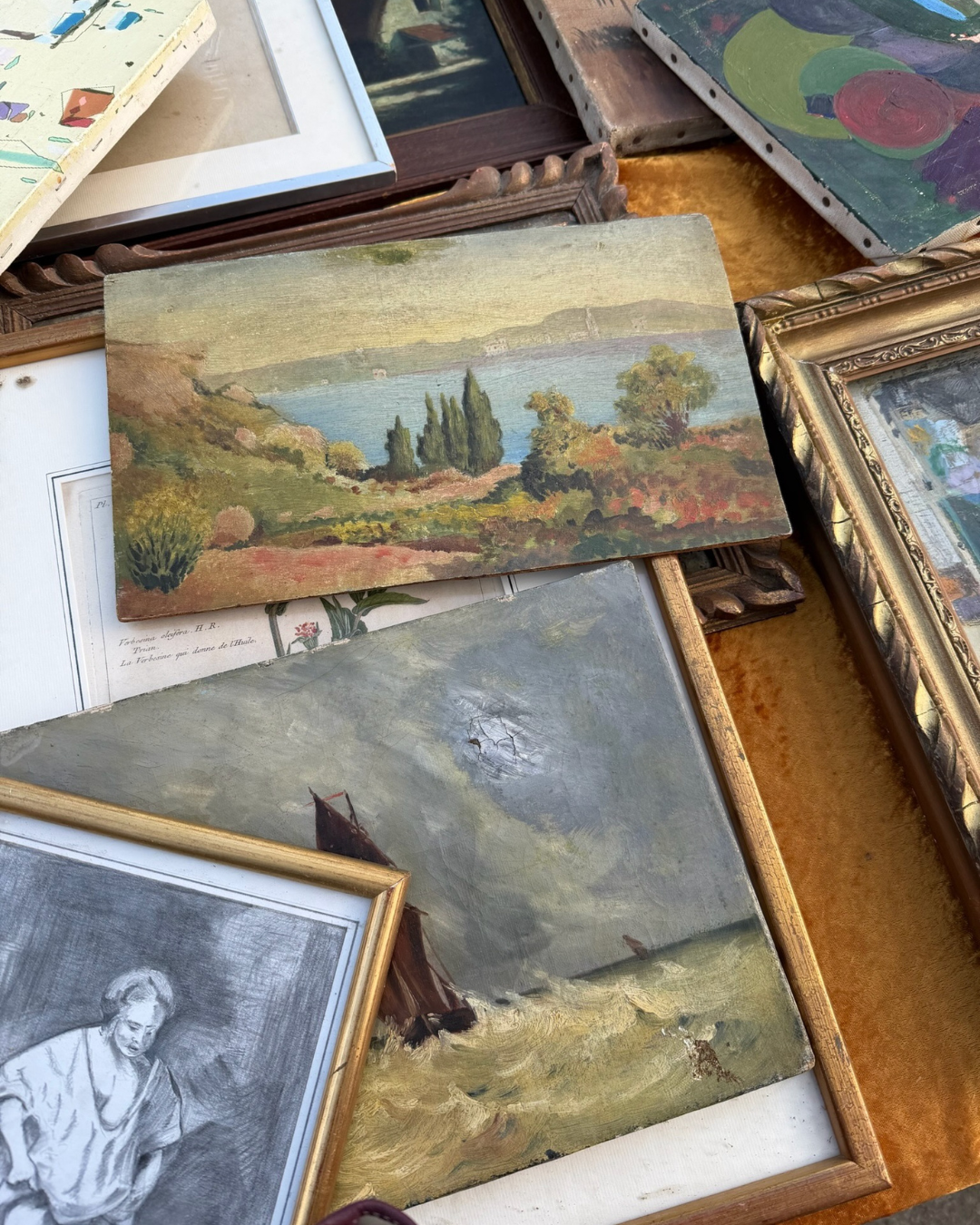
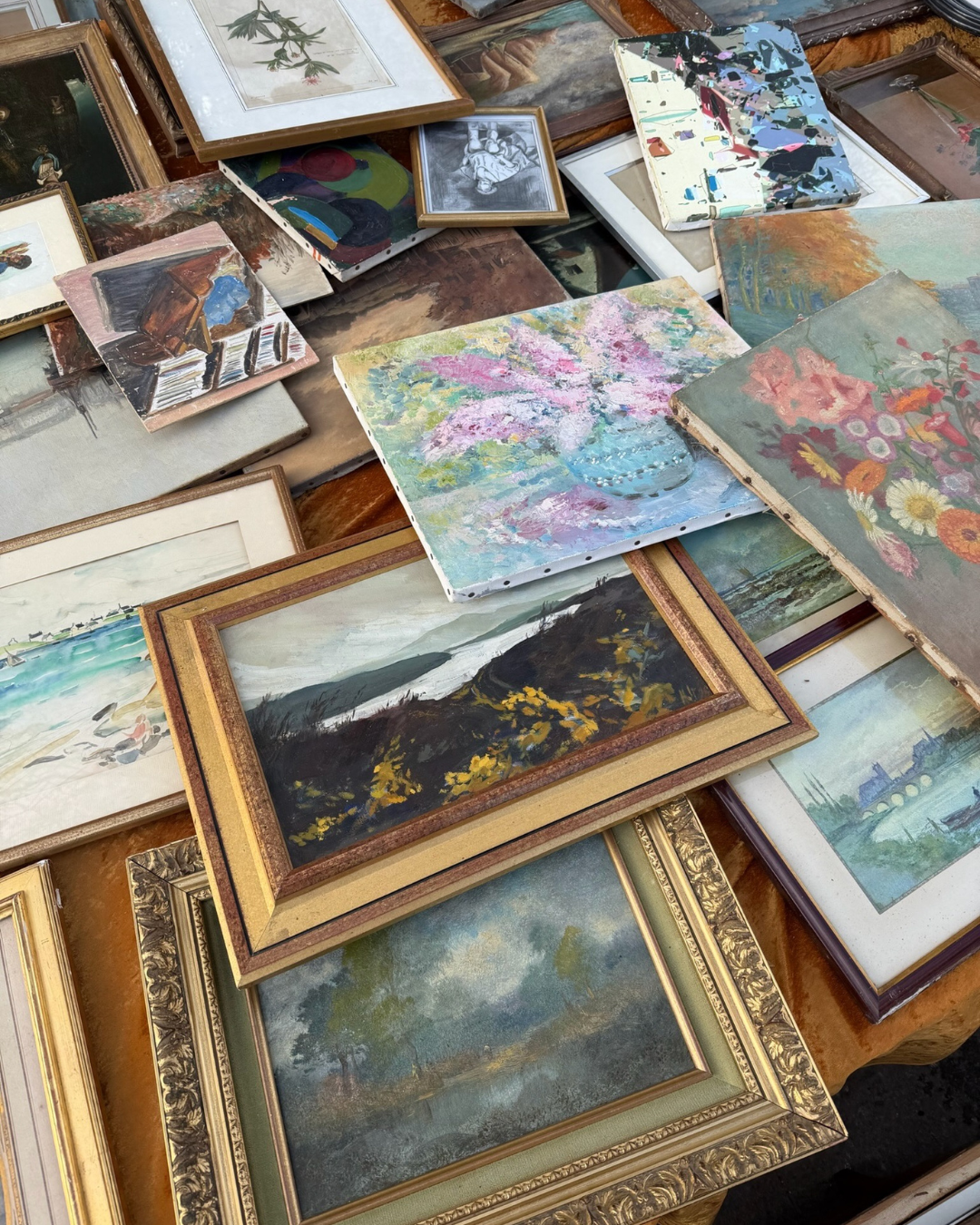
Then there's Marché aux puces de la Porte de Vanves , which is on the other side of the city and is where the real hunting happens. Think card tables, mismatched stalls, sellers who are open to a deal. It's less curated, less pretty, and honestly more fun. The energy is closer to a thrift store than a boutique, which means the prices are too, if you're willing to ask.
What's Worth Buying
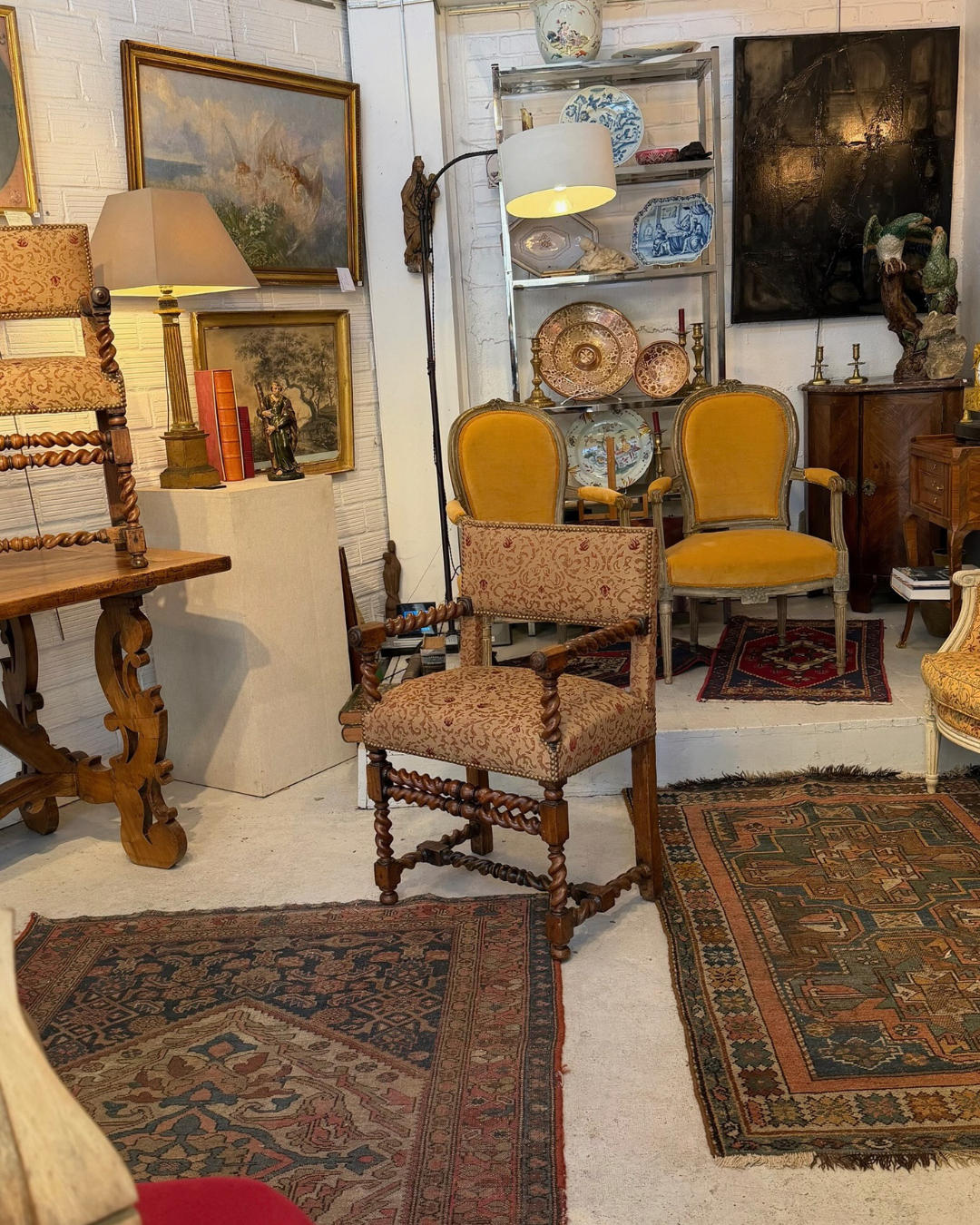
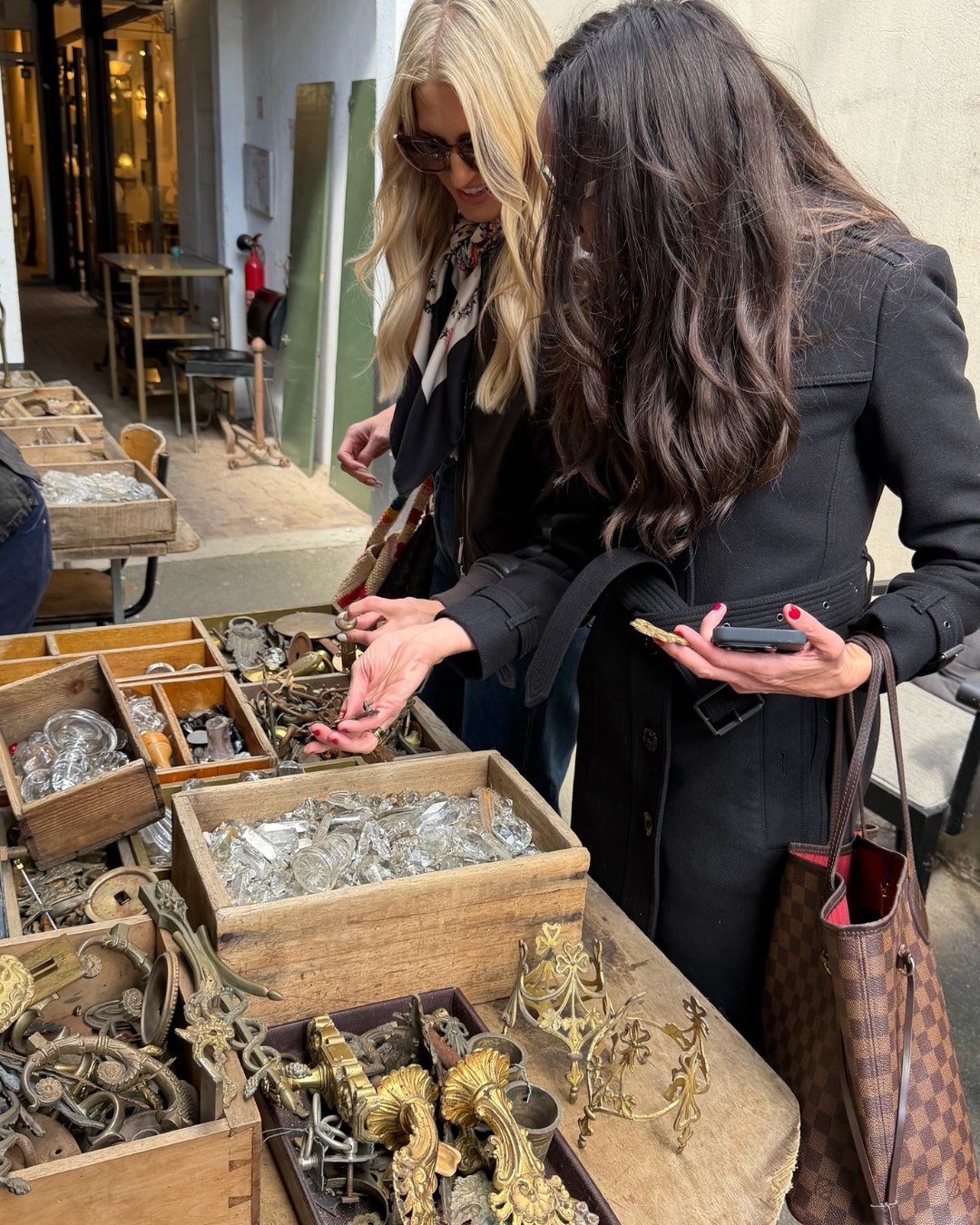
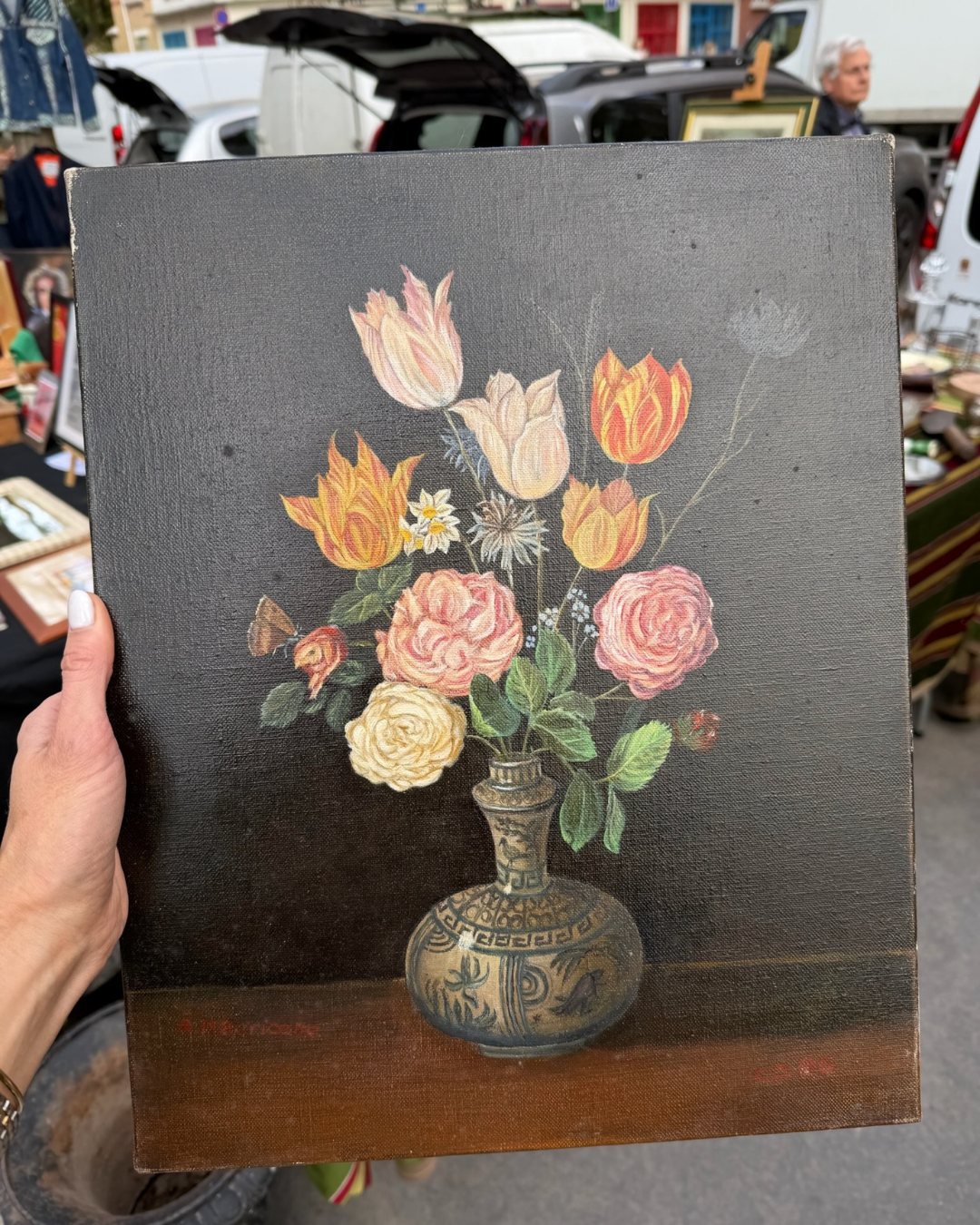
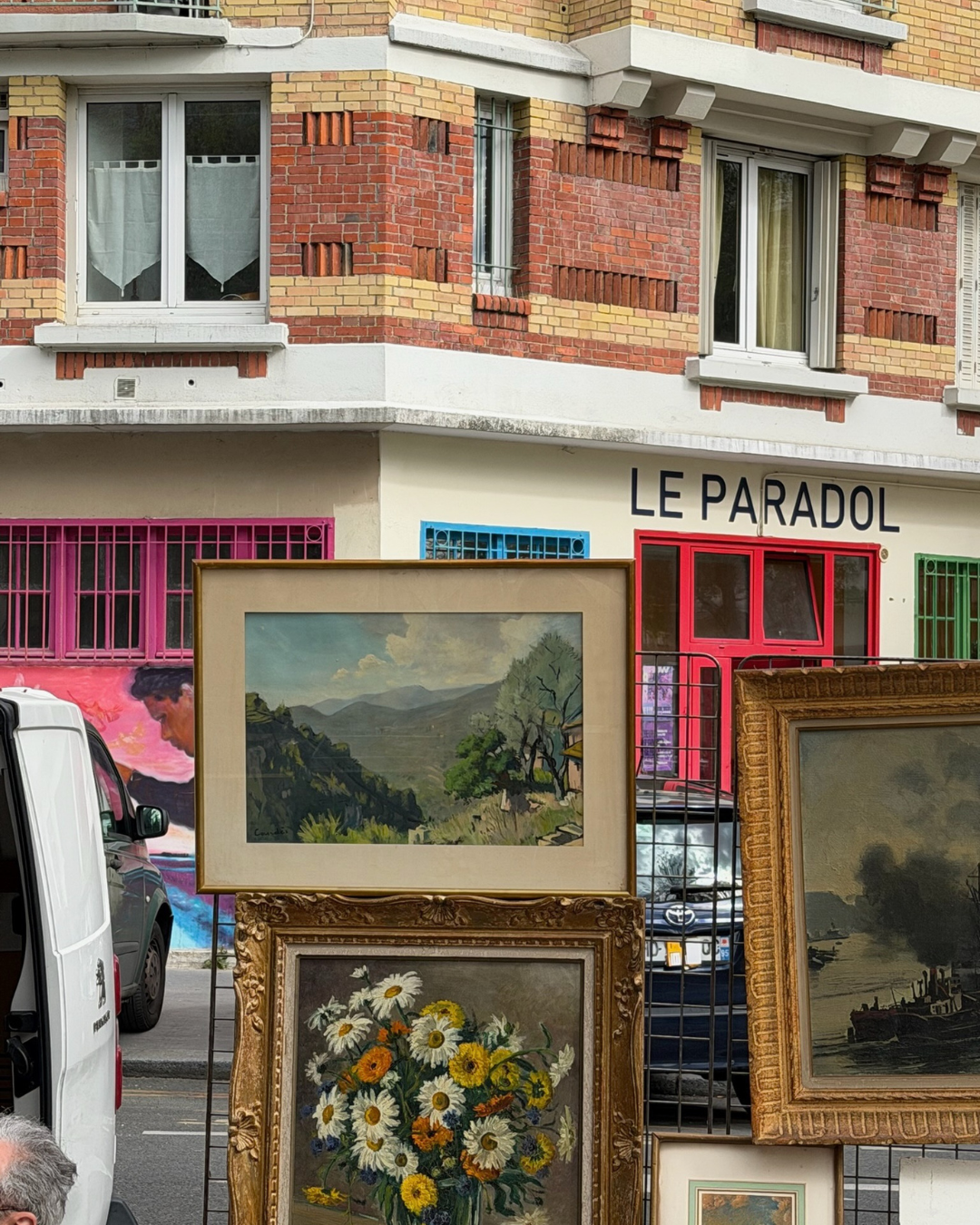
Art and smaller decorative objects are the sweet spot. Easy to carry home with you, and a fun souvenir to display in your home. There is lots of serveware, vases, and little vintage finds that are one of a kind. Some of my favorite purchases were these unique vintage boxes of all shapes and sizes that were once medicine boxes.
I went in knowing I wanted art, which gave me a focus without making the whole day feel like a task. That's a good approach. I picked up some smaller objects too but honestly wish I could have brought back so much more.
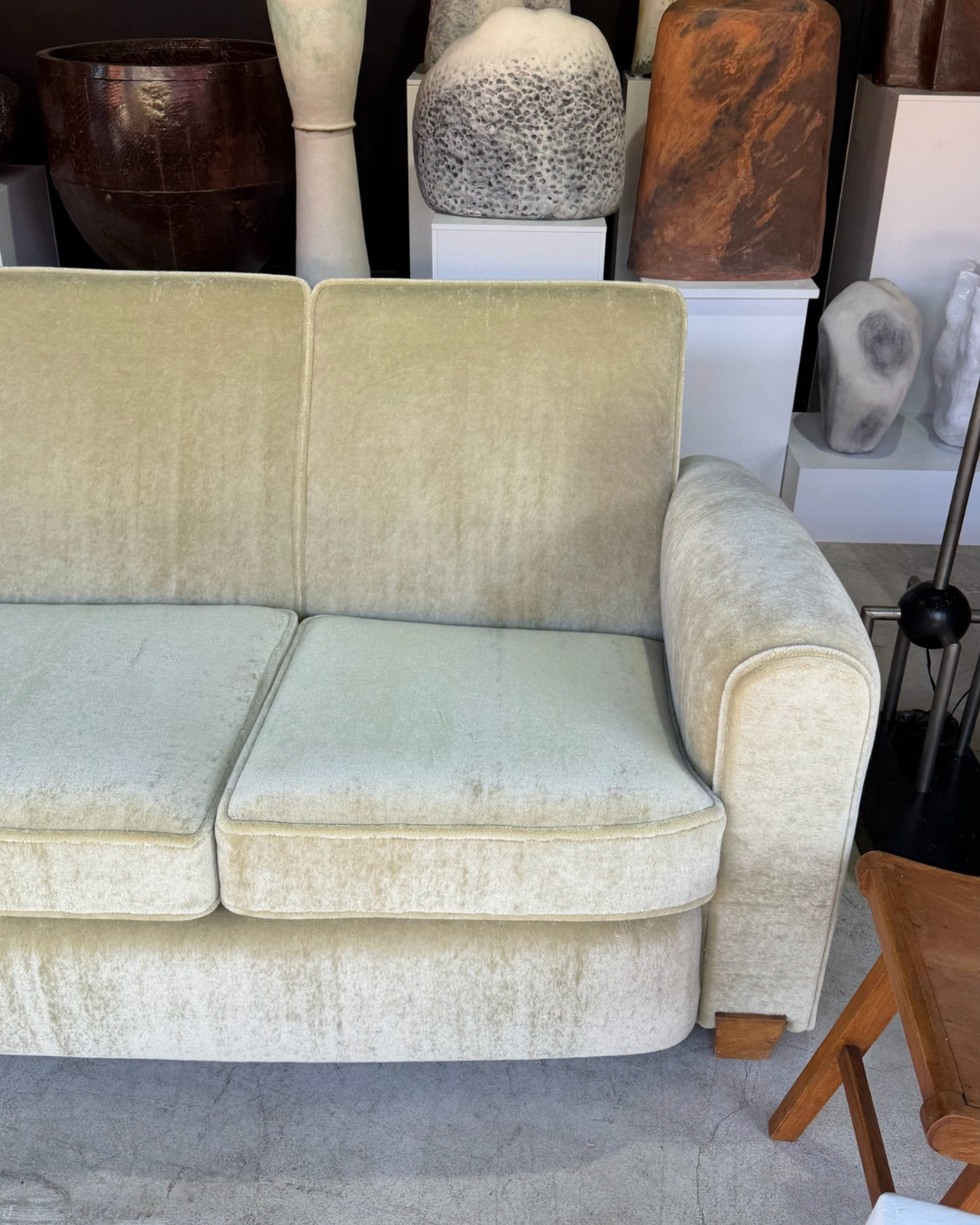
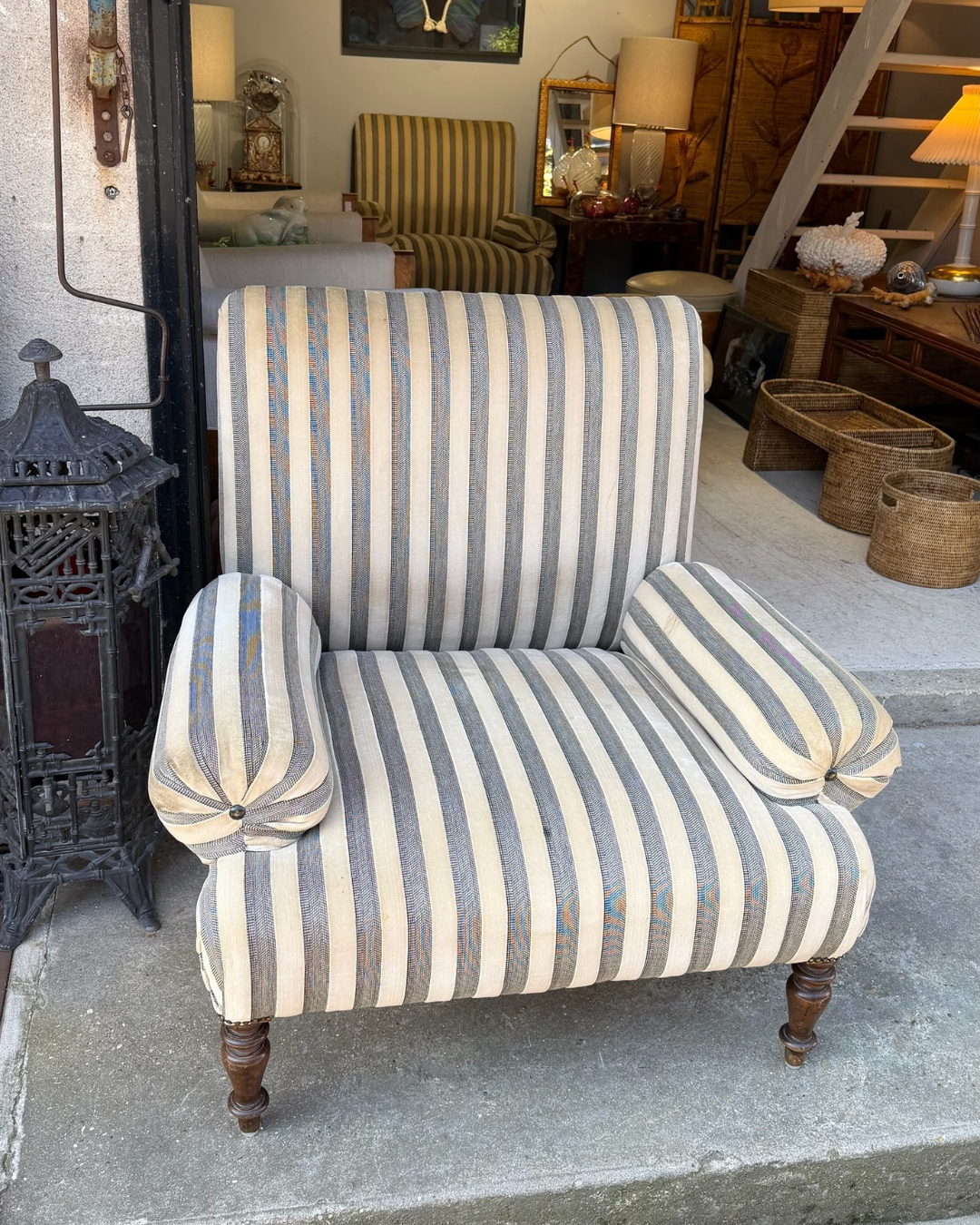
Furniture is absolutely doable, but it requires more planning. Don't write it off, just go in with a plan (see: shipping, below).
Practical Things That Actually Help
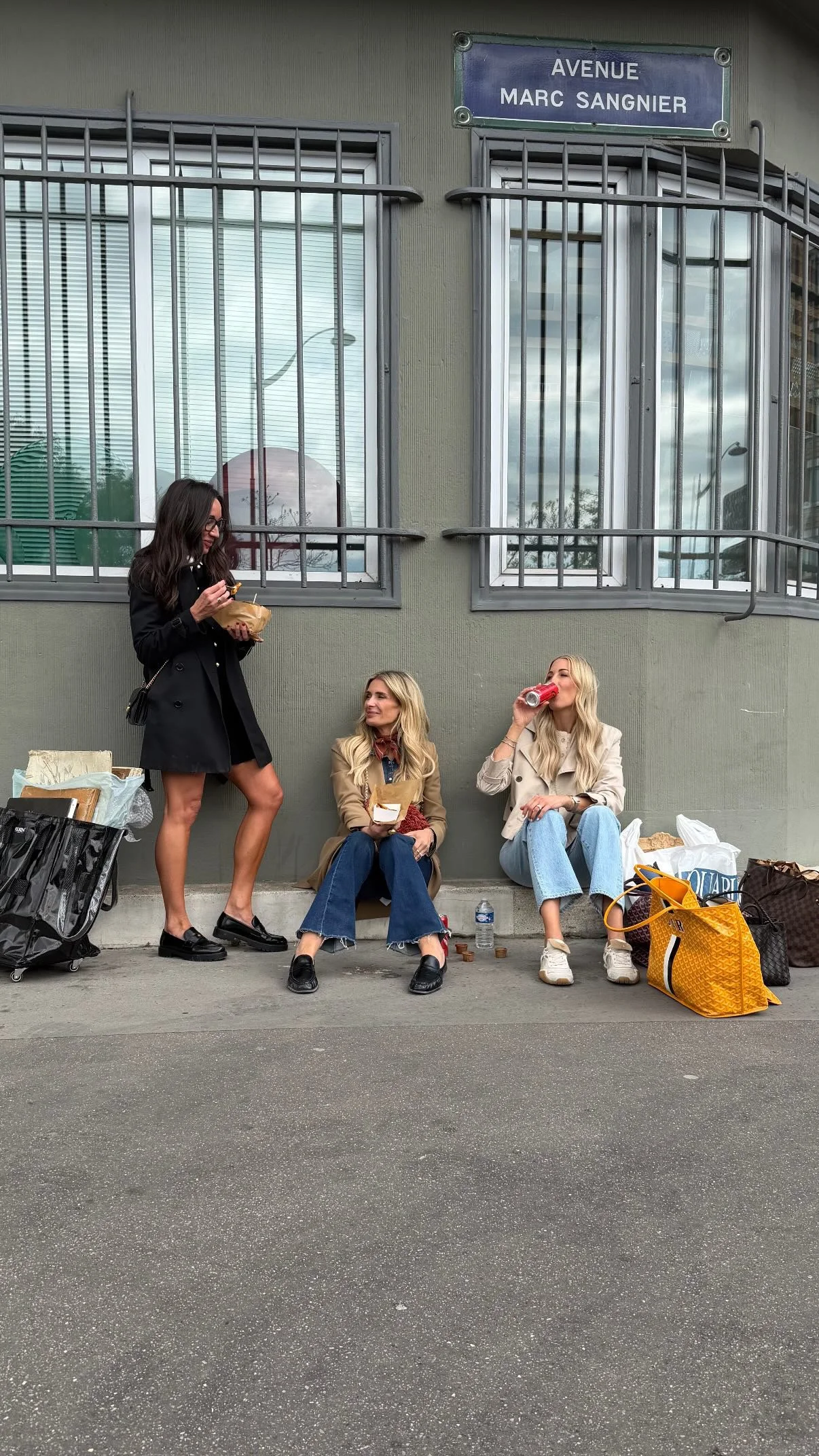
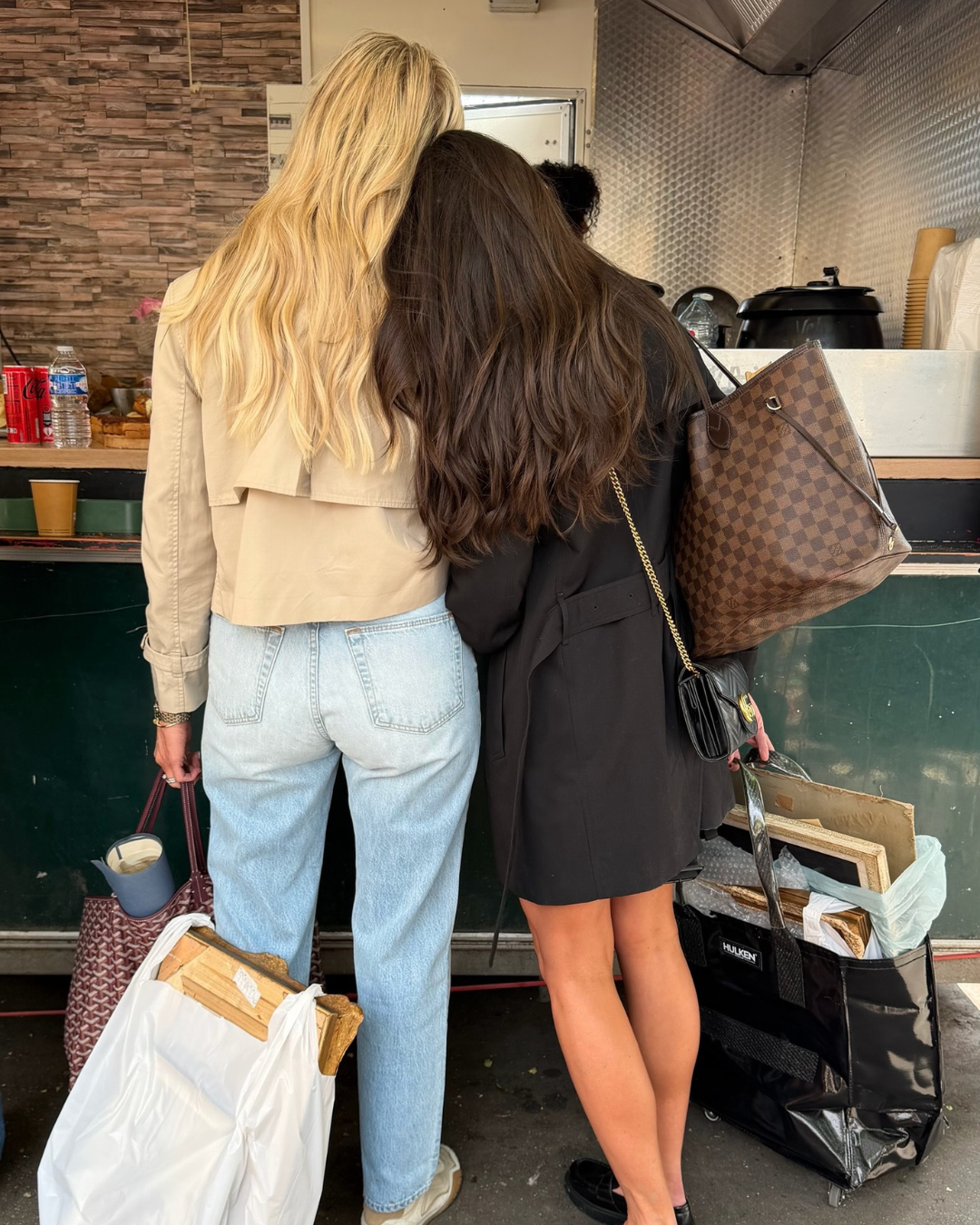
Bring a Hulken bag. It's a wheeled tote that holds a surprising amount and doesn't destroy your shoulder over a full day of walking. You'll thank yourself by hour three.
Ask for bubble wrap wherever you go. The nicer market stalls will wrap purchases for you, but in the card table section, you will need to ask. Bubble wrap is hard to find so grab it when you can! You don't want to get back to your hotel and find something broken at the bottom of your bag.
Negotiating is completely normal and expected, especially at the more casual stalls. Don't be shy about making an offer. The worst they can say is no, and most of the time they won't.
Bring cash, go early, and wear shoes you can actually walk in all day.
The Part Nobody Tells You About: Shipping
Before we get to actual shipping: for smaller pieces, you have more options than you might think. I packed ceramics and other breakables directly in my carry-on, and smaller art went layered flat between clothes in my checked bag. Everything traveled fine.
For anything that needs to be shipped, art and mid-sized pieces cost me about $200 per piece. The way this works is that you coordinate directly with the shippers who have storefronts as locations like the Marché Dauphine, plus around Biron and Paul Bert Serpette. At these, you can get a quote and sort out the logistics before you leave Paris so be sure to stop here with all of your exciting purchases before you go!
Furniture is the one thing I haven't shipped myself, but I've gotten the rundown from a friend who has. For a single piece, you can go through a carrier like FedEx or a freight service, pricier per item, but simple. If you're bringing home multiple pieces, a shipping container is your best bet: you pay a flat fee and can fill it with as much as you want. It comes by boat, so plan for a significant lead time. It's an investment, but if you're filling an entire container, it starts to make a lot of sense. And I mean, how cool is it to say your furniture is from Paris?!”
One thing that's increasingly important: tariffs. Hold onto your receipts and any proof of payment for everything you're shipping home. Ask the shippers specifically what documentation customs will require. It's worth getting clarity on that before you finalize anything.
If you're heading to Paris and you care about design at all, make time for this. A full morning, comfortable shoes, a little cash, and no rush. It's one of those days that tends to end better than you planned.