Our Styling Process
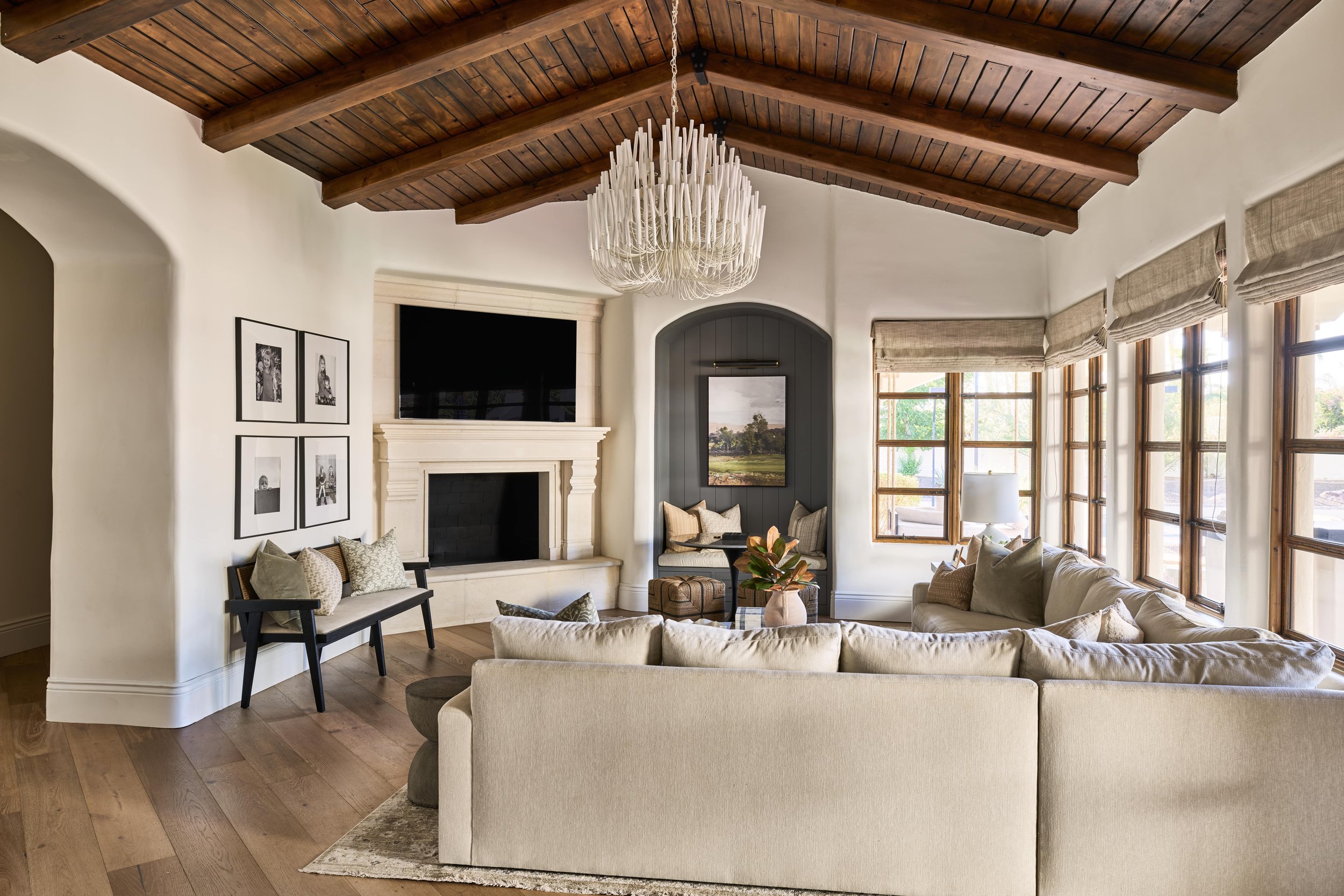
There's a moment at the end of every project I never get tired of: our clients walking into their finished home for the first time. Almost every time, someone cries and it's never just because of the sofa or the tile. What gets them is seeing it all together, down to the books stacked just so and their grandmother's candlesticks finally out of a box and on the mantel.
That's the magic of styling. It's the part of design most people can't name but everyone feels, and it's why a house can have beautiful finishes and perfect furniture and still feel unfinished. In a full-service project, we plan this layer as carefully as the architecture, and it starts much earlier than people expect.
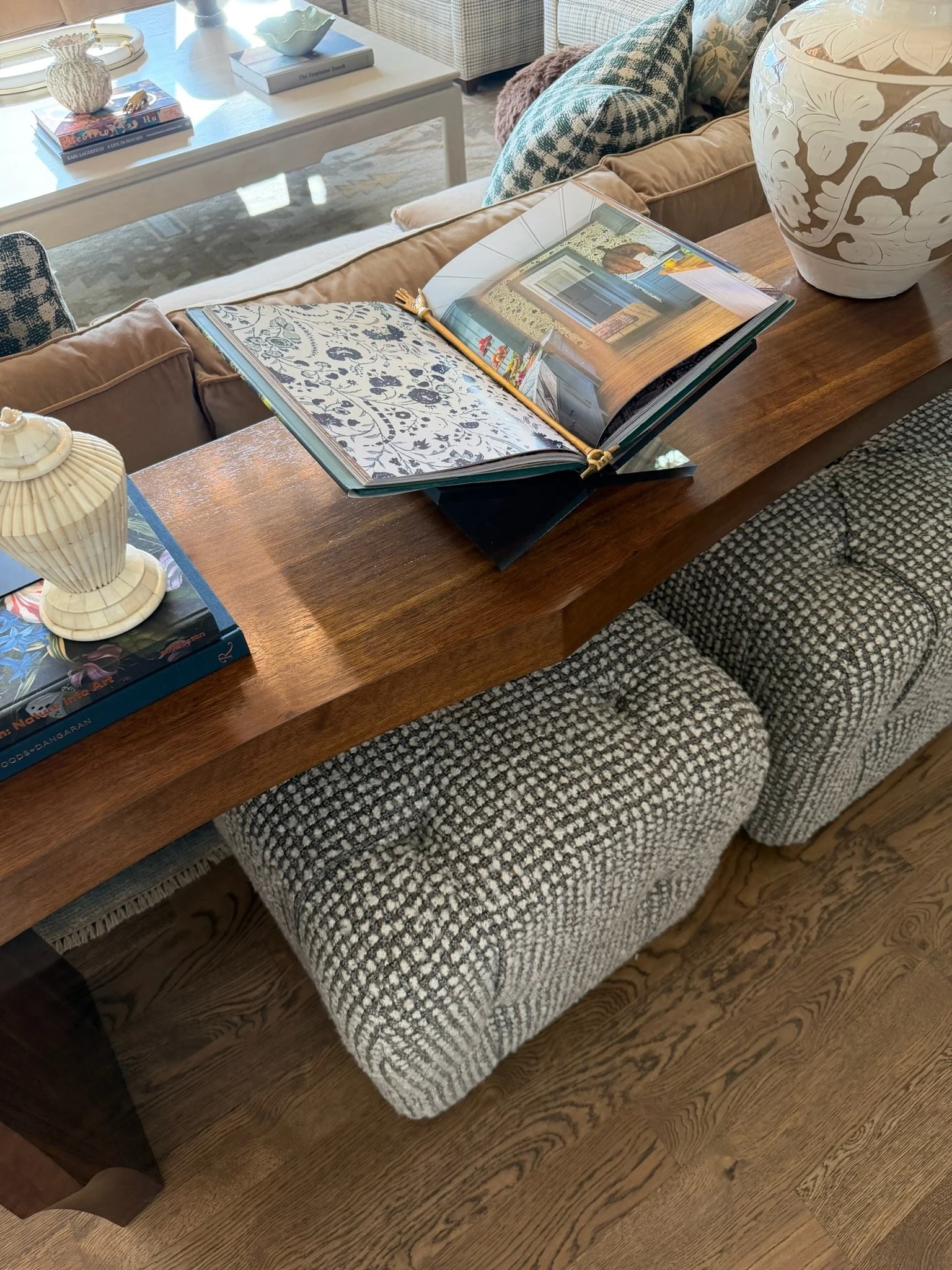
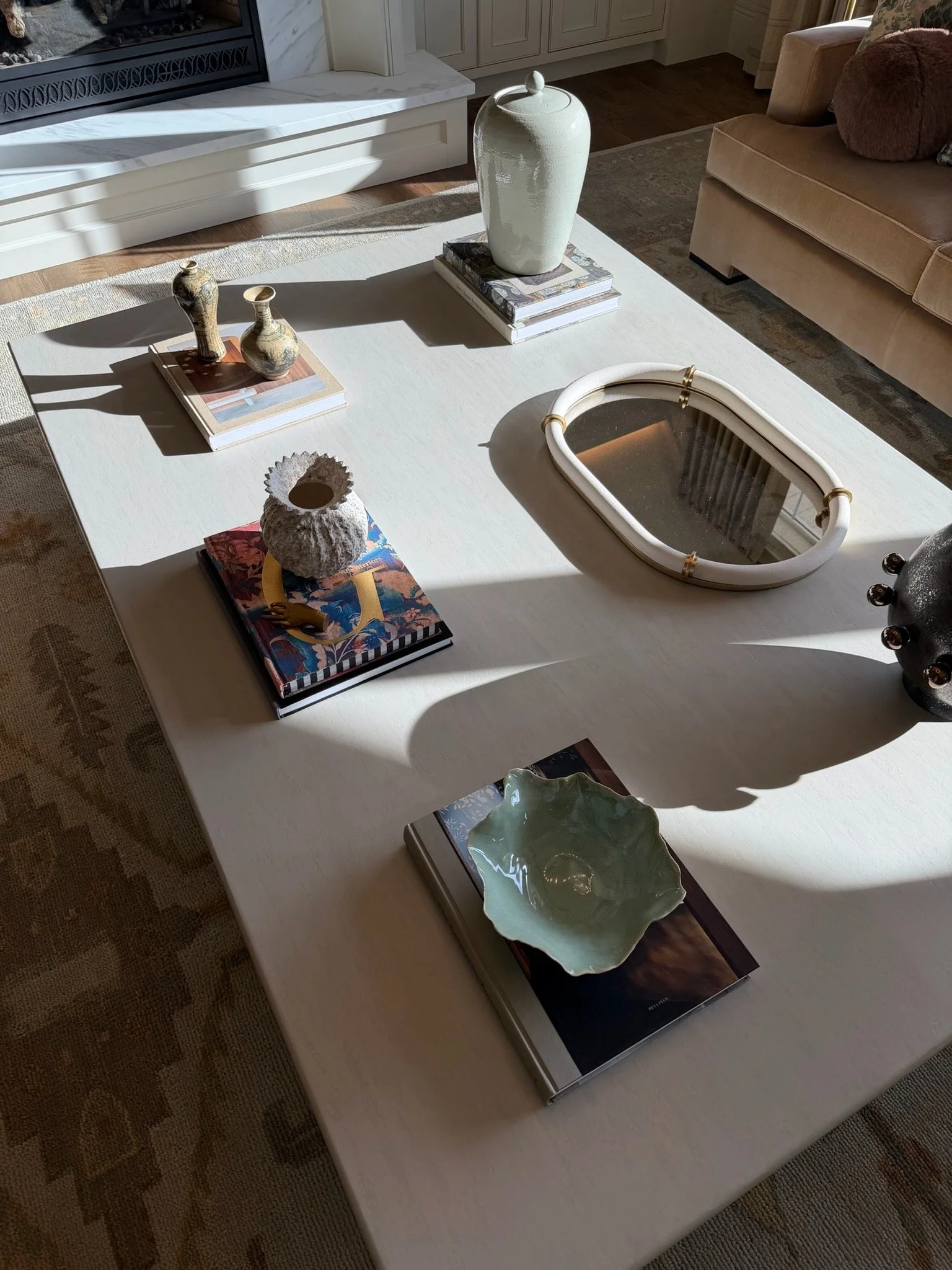
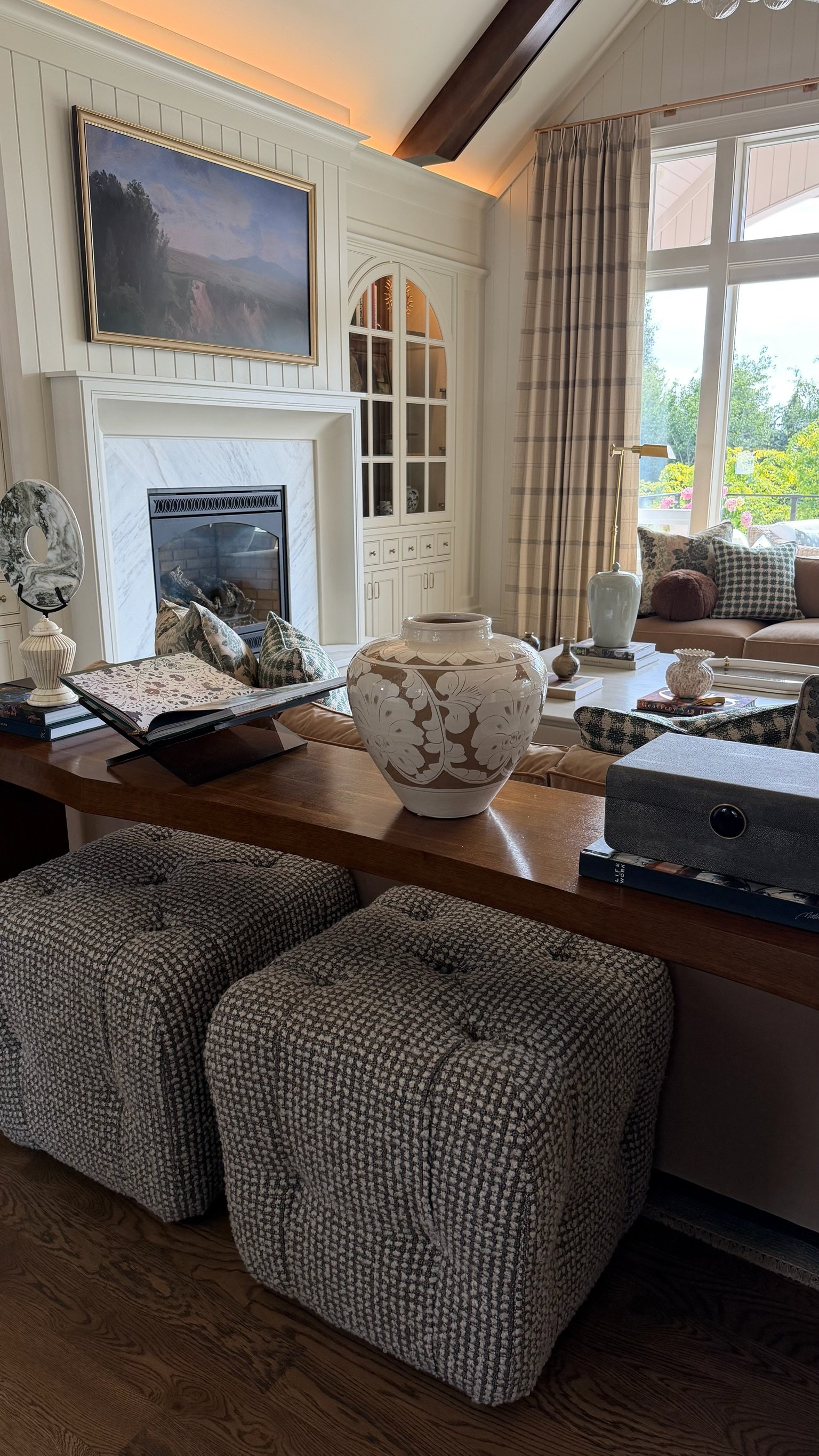
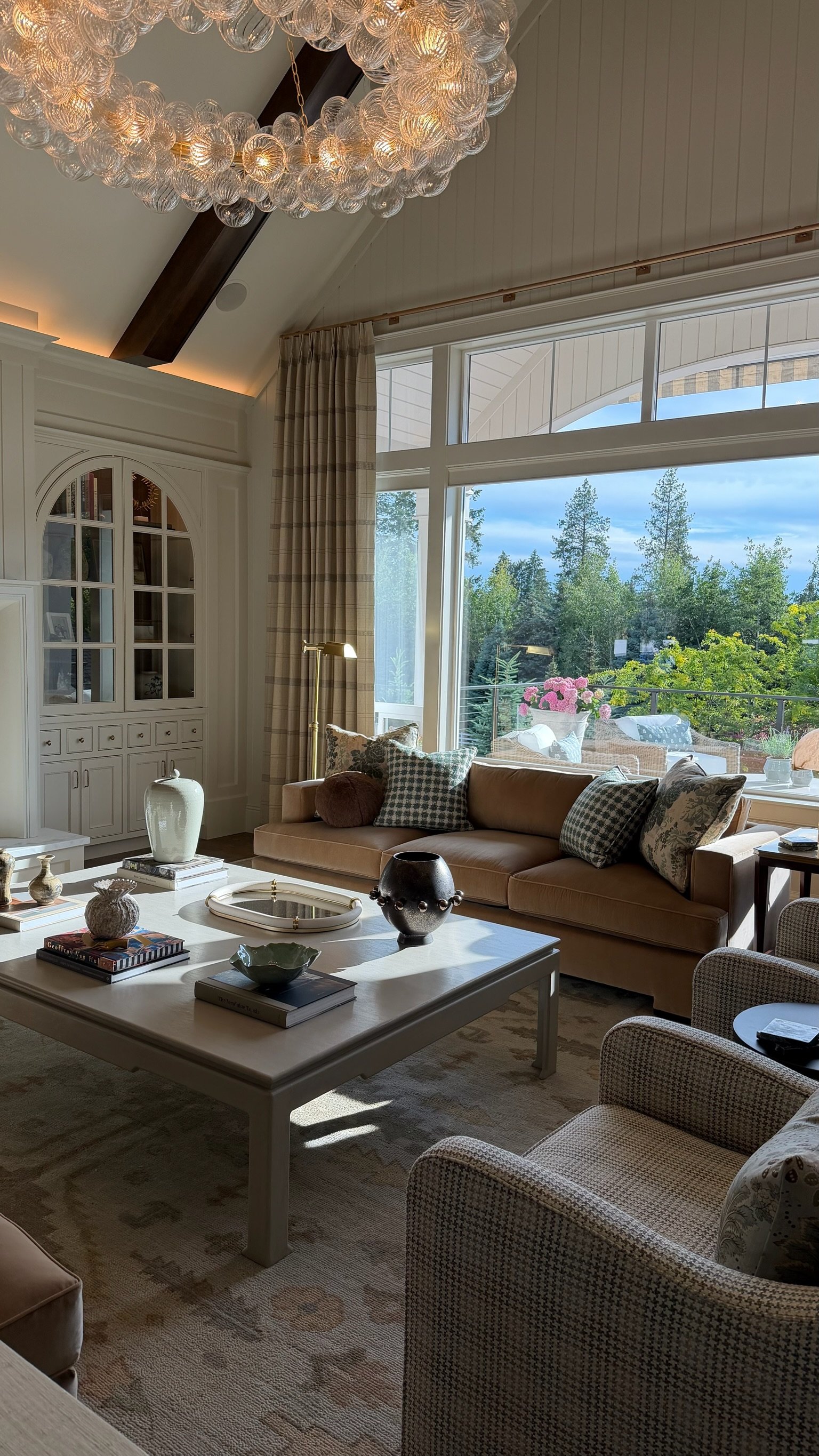
The Final Step
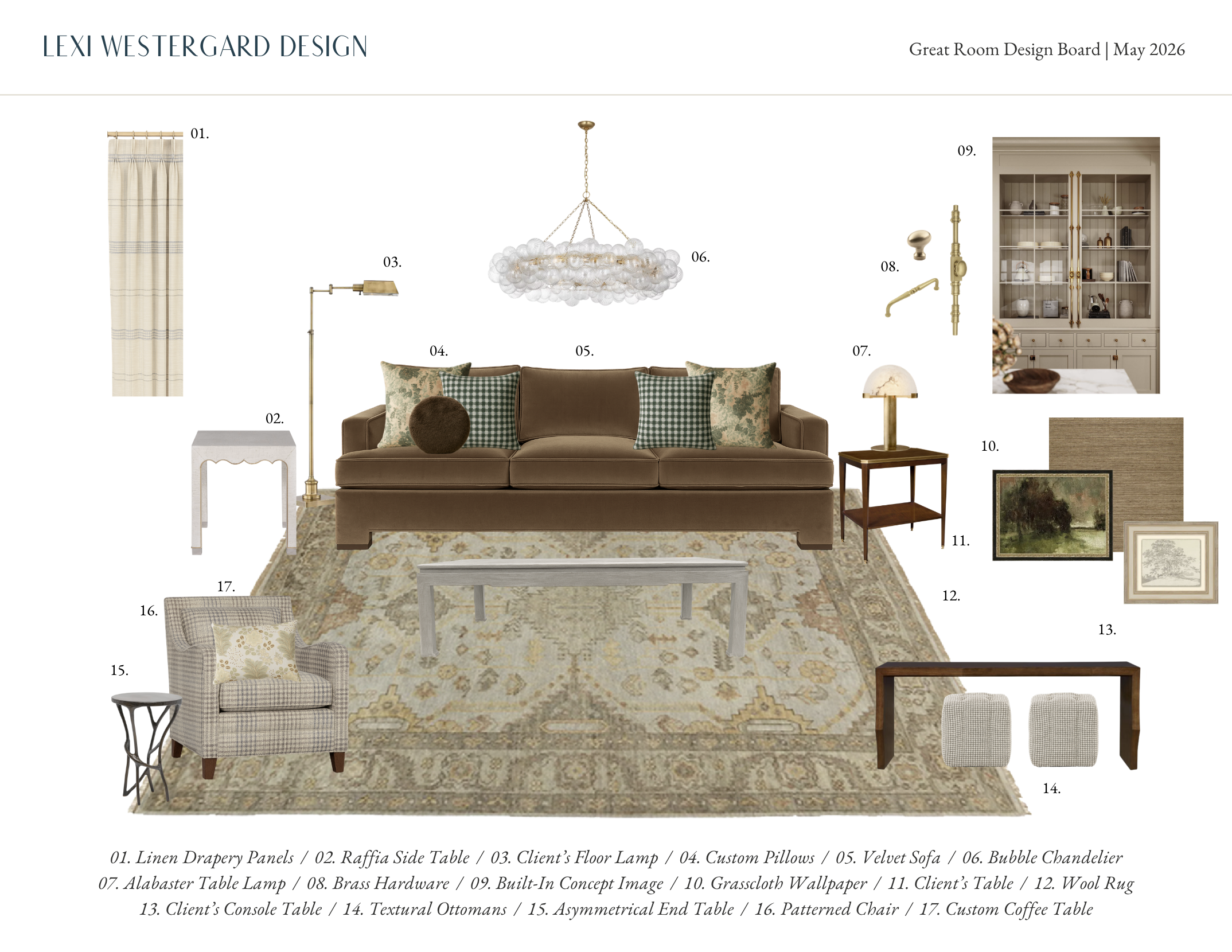
Styling is the last phase of a project, but it starts long before install day. Once your furnishings plan is approved, that plan becomes our roadmap. We style directly off of it, keeping the drawings and every fabric and finish sample next to us while we source. So when we're considering a vase or a stack of books, we're holding it up against the actual rug, the actual pillow fabric, the actual wood tone it will live near.
It's the reason everything goes together when it all lands in your home. Nothing is chosen in a vacuum and nothing is a lucky guess.
The Importance of Detailed Drawings
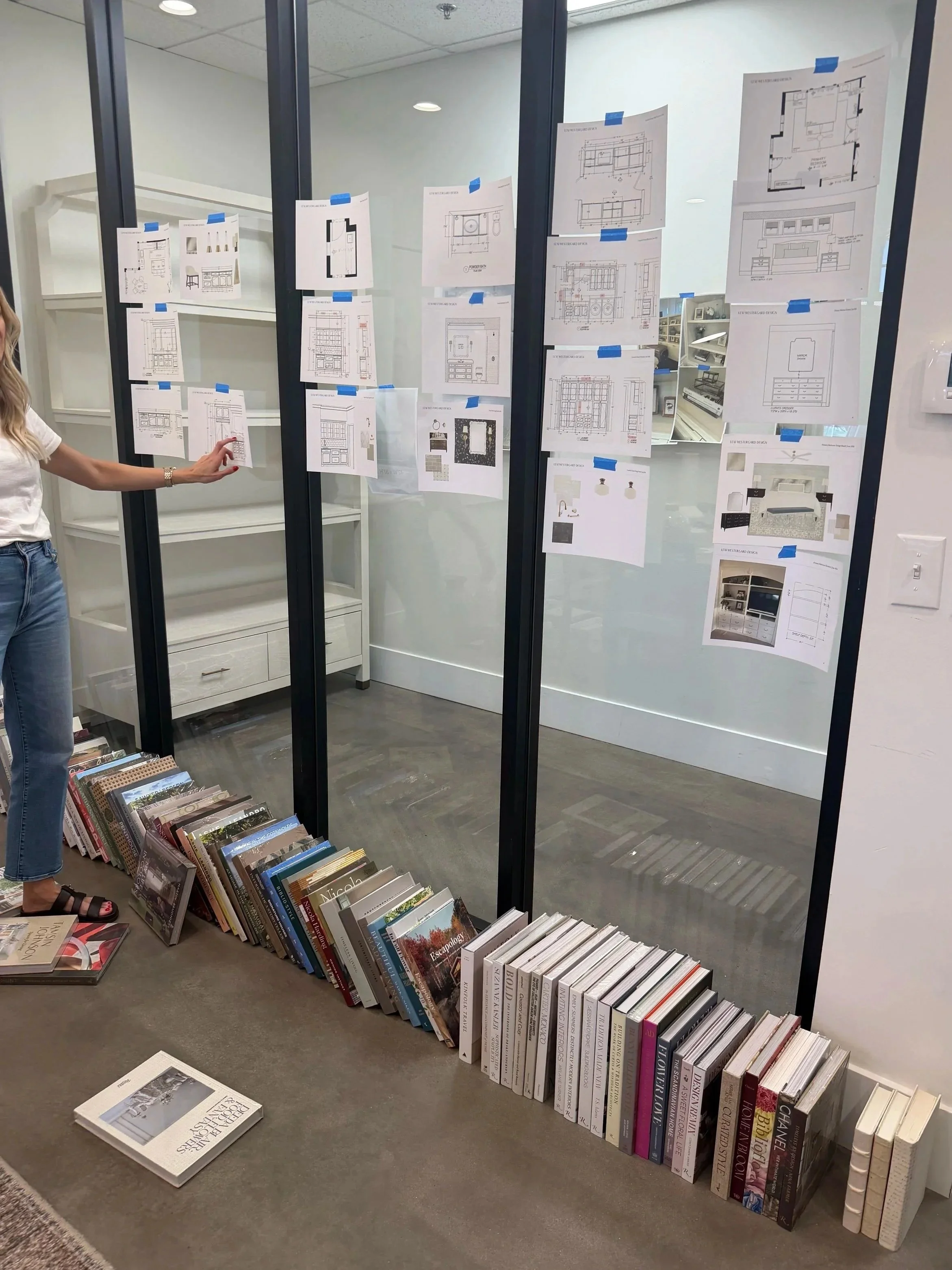
Just about every surface in a project gets an elevation drawing. They're made for construction, but we borrow them for styling. Before we shop, we know the dimensions of every shelf, coffee table, side table, and countertop in the house.
We even measure the sentimental pieces our clients want included, so a favorite heirloom has its spot reserved months ahead of time.
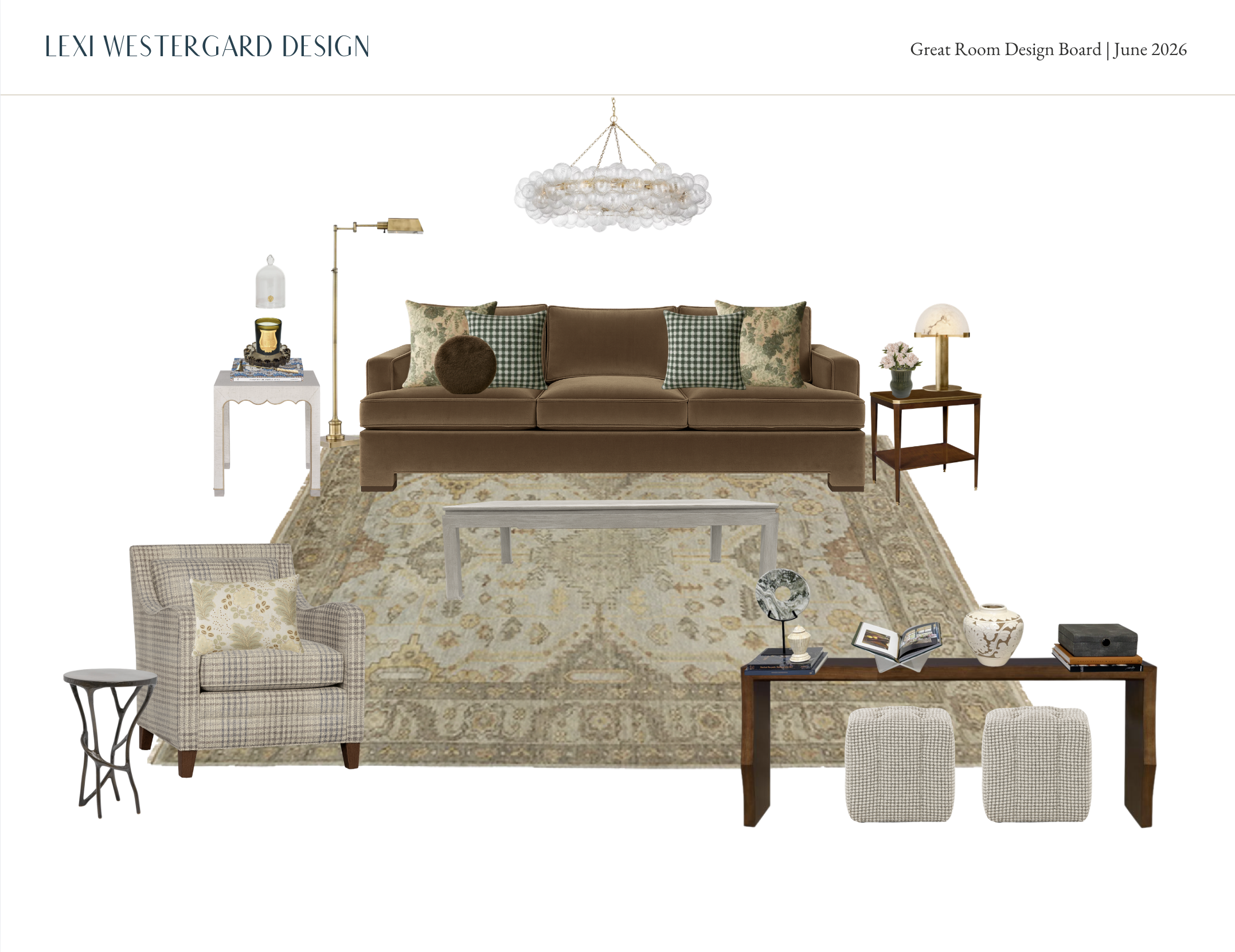
Then comes my favorite part. Back in the studio, we recreate those areas with our own furniture and style them for real: testing, swapping, standing back, starting over. By install day we aren't experimenting in your home. The compositions already exist, and we're just placing them.
Art as a Styling Layer
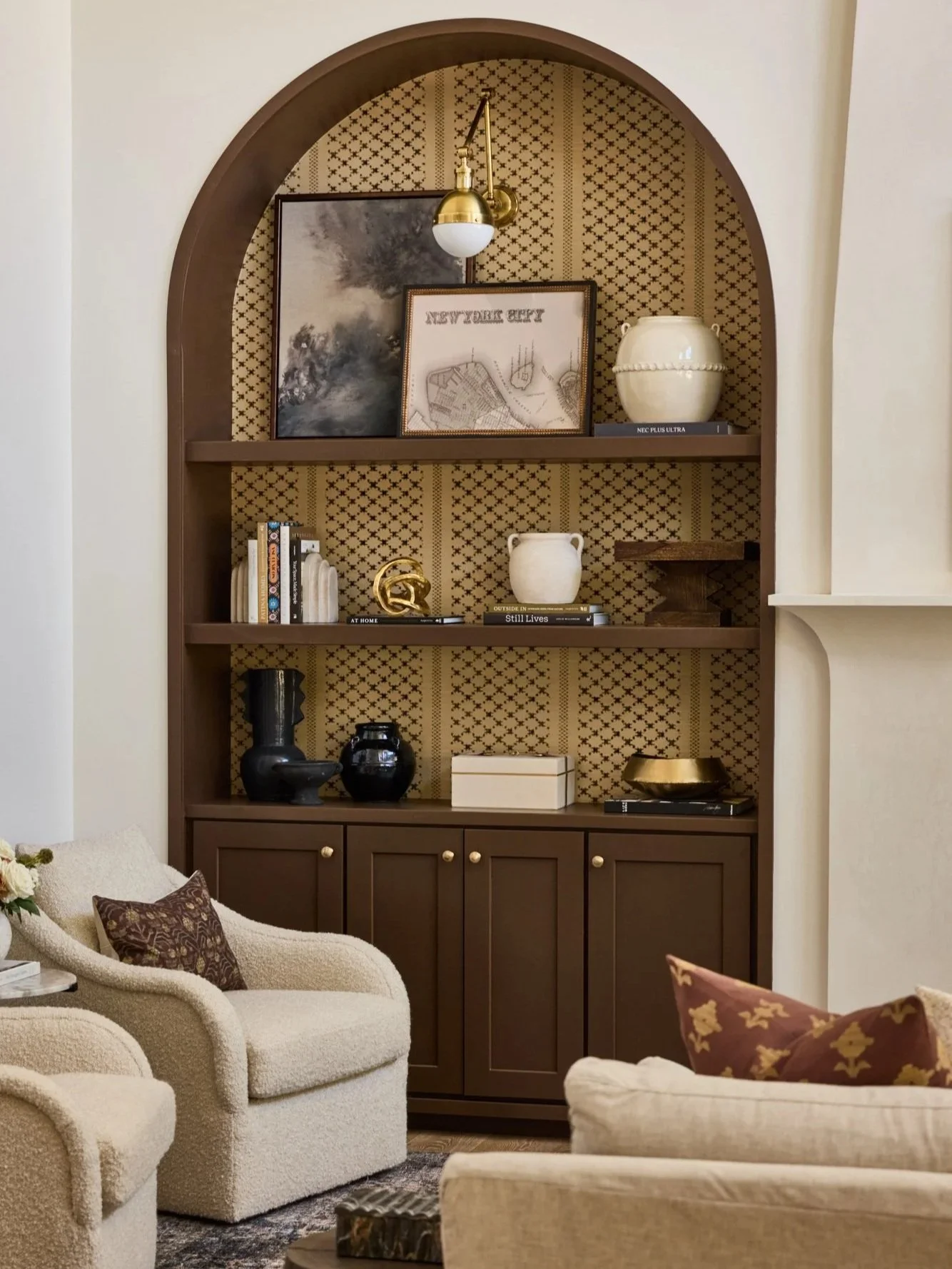
When most people think of art, they picture the big statement piece over the sofa and we obviously add lots of beautiful artwork on the walls of our projects. But an underrated way to use it is through smaller pieces tucked into bookshelves, set on consoles, worked into vignettes. Nothing makes a home feel collected over time quite like it.
The selection isn't random. We pull colors straight from the room, so a rust tone from the pillows shows up again in a small abstract, or the blue in the rug turns up in a landscape three shelves away. When the art repeats colors that already live in the space, the room reads as one story instead of a bunch of separate decisions.
We lean them against the back of a bookcase, tuck them behind a bowl on a console, or set them on little easels. Leaning gives you depth: a soft shadow, a corner disappearing behind an object. It's the difference between a shelf that feels layered and a shelf where everything is lined up facing forward.
Building Vignettes
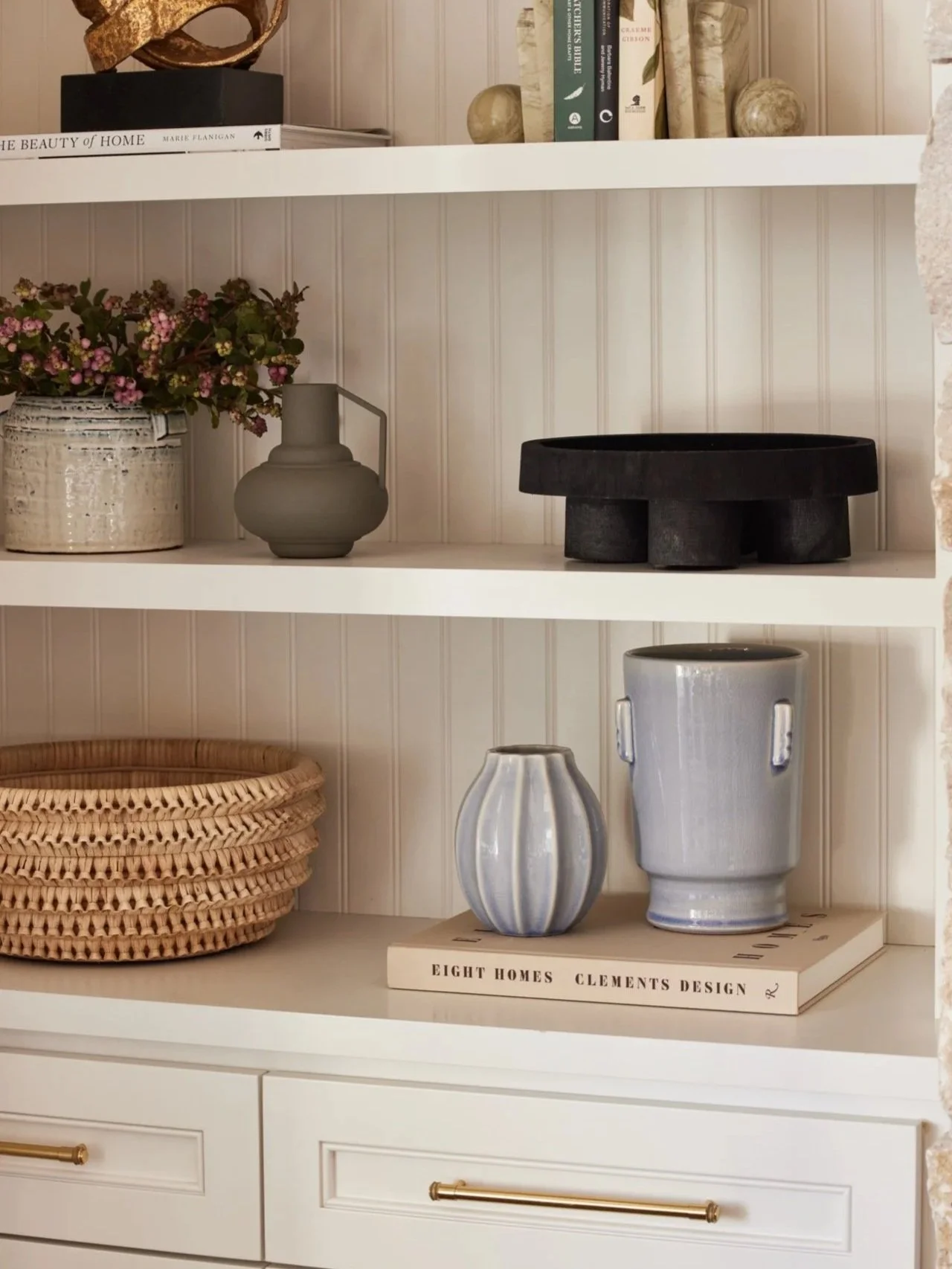
Vignettes are those small groupings of objects on coffee tables, consoles, and shelves, and honestly, this is where styling starts to feel like play.
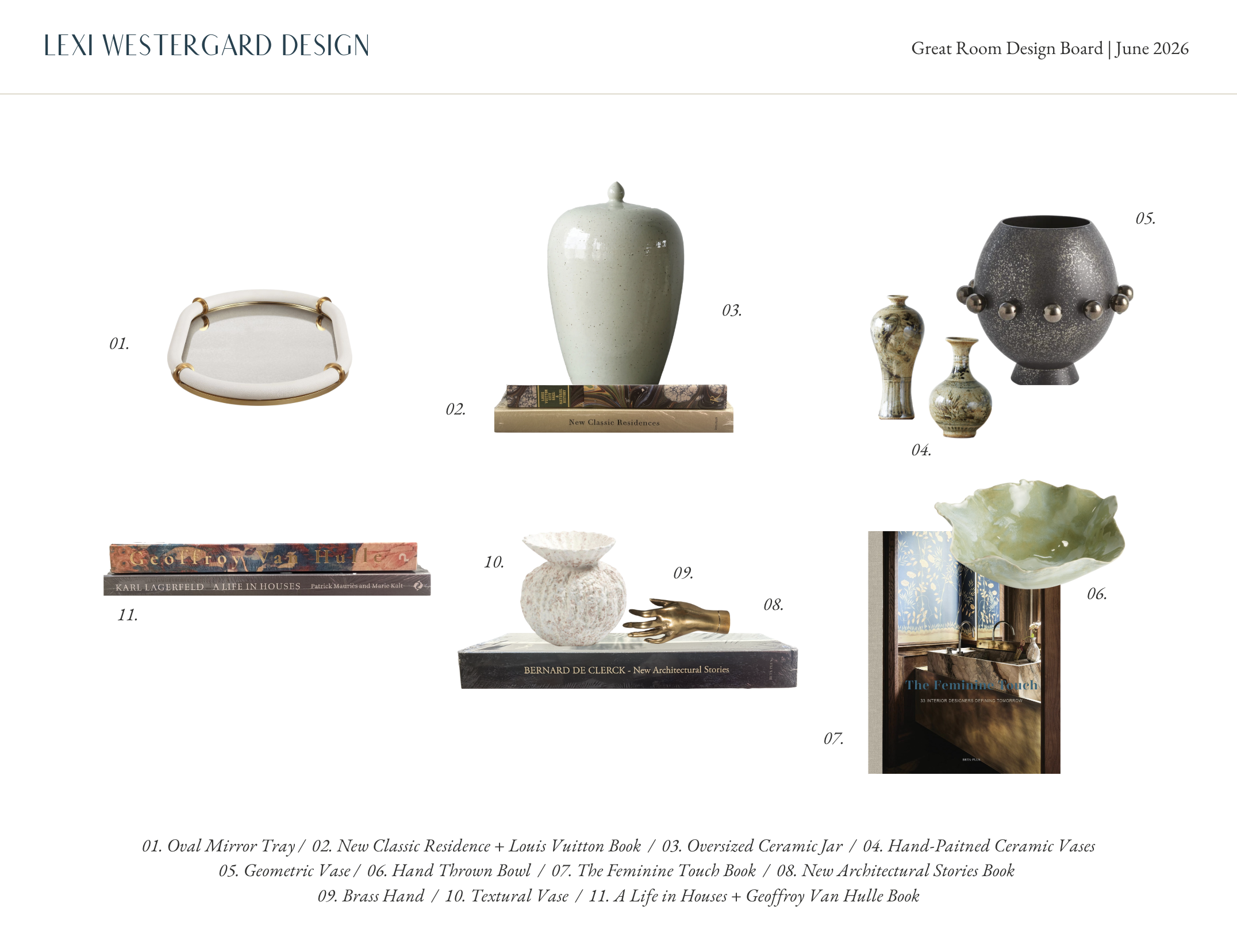
Ours follow a loose formula: something vertical (a lamp, a tall vase), something horizontal (one or two coffee table books), and something organic (a branch, a bowl, anything with an irregular shape). For the objects we reach for over and over, read How to Style Built-Ins Like A Designer.
I'll admit that even with everything planned to a T, there are always last-minute adjustments in the space. A grouping that looked perfect in the studio might shift a few inches, or hop to another shelf entirely, once it's sitting in the room's actual light. And that’s completely normal.
The Pieces That Make It Yours
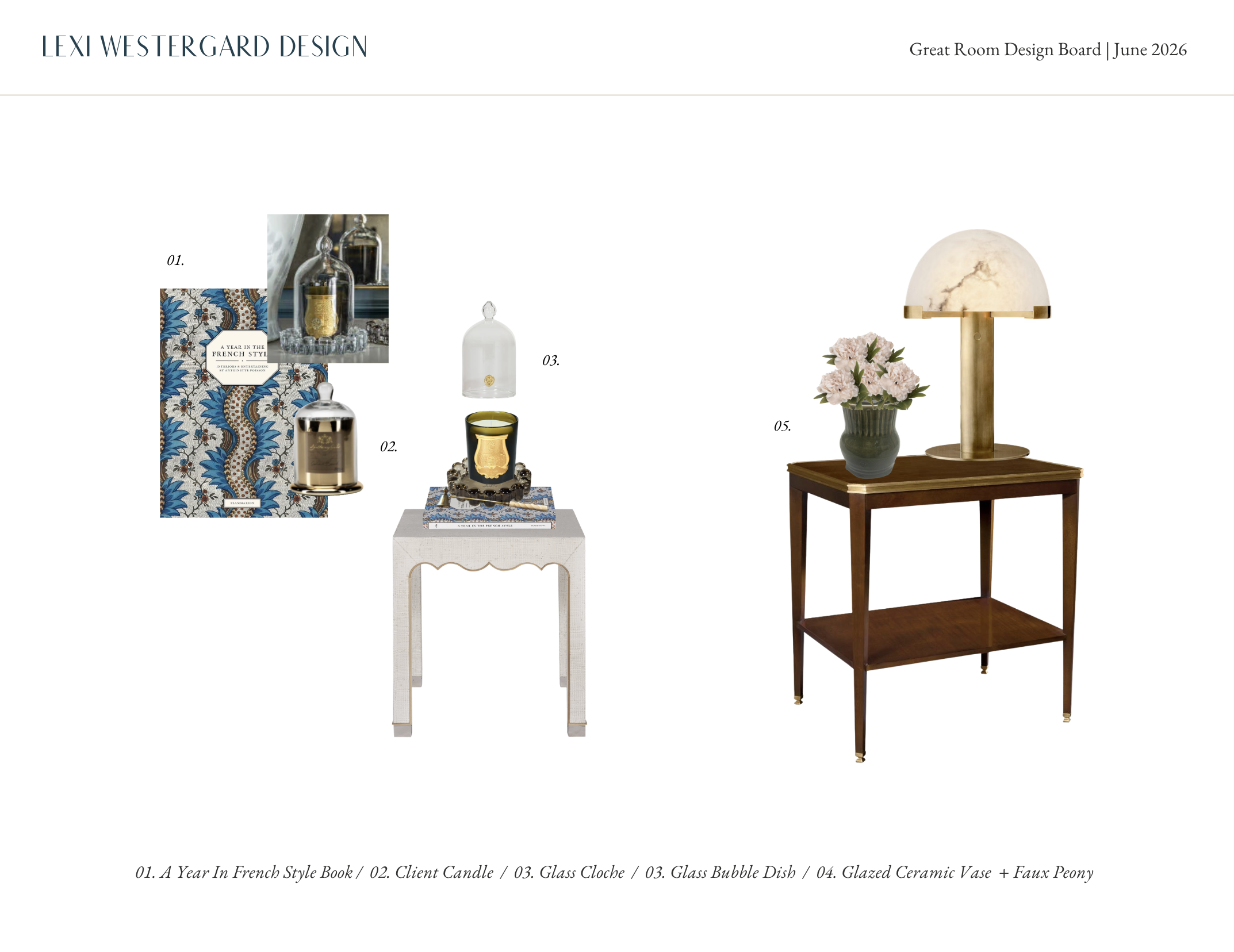
About 80% of the styling in a finished home is sourced by us. The other 20% belongs to the client: heirlooms, travel finds, books, and lots of family photos. Before we start styling, we ask clients to pull out the objects that matter to them, and we design around those sentimental pieces with the same care we give a custom sofa.
It's also one of our favorite conversations in any project: sitting with clients while they pull out the pieces that mean something and tell us the stories behind them. Anyone can make a shelf pretty, but the craft is making it yours. A styled home full of brand-new objects is a showroom. It's the story behind the objects that makes people cry at reveals.
For planning purposes, we tell clients to expect about 5–10% of their furniture budget to go toward accessories.
How We Present
When our clients see the accessories for their home depends on where the project is.
For Arizona projects, everything is planned ahead in the studio, working from the drawings and samples, but we keep the flexibility to bring extras and make swaps on site. Our local clients see their accessories for the first time at reveal, fully styled in their home. It's part of what makes the reveal so special.
Out of state projects are different, because it’s difficult to bring extra items back home. Everything is planned the same way, then pulled together into a presentation and organized by room, so clients can approve every accessory before it's boxed up and shipped to their home. For something like a full built-in or a styled coffee table, we'll often build a rendering too. This helps the clients understand how those pieces will feel in their space.
Either way, install day itself is the easy part. What's left is the fine-tuning: adjusting a vignette, nudging something an inch, stepping back, nudging it again.
The Finishing Touch
Great styling is equal parts planning and instinct. The drawings and measurements get a room most of the way there, and the rest is knowing what to move two inches, and what to leave beautifully alone.
If you're beginning a new project and want your home to feel lived in and loved from day one, this is what full-service interior design looks like in our studio, and styling is built into every project we take on. Fill out an inquiry form and let's talk about your dream home.