How I Mix Patterns (The Formula I Use for My Clients)
Over the years, pattern mixing has become my signature - it's the first thing people point to when they describe my work.
When it's done well, it takes a space from being pretty to something you genuinely can't look away from. Over time, I have developed a formula that once you understand, you start seeing everywhere.
Here's the exact three-layer method I use on every project, so you understand what you're looking at when you walk into a well-designed room.
Layer 1: The Organic or Floral Anchor
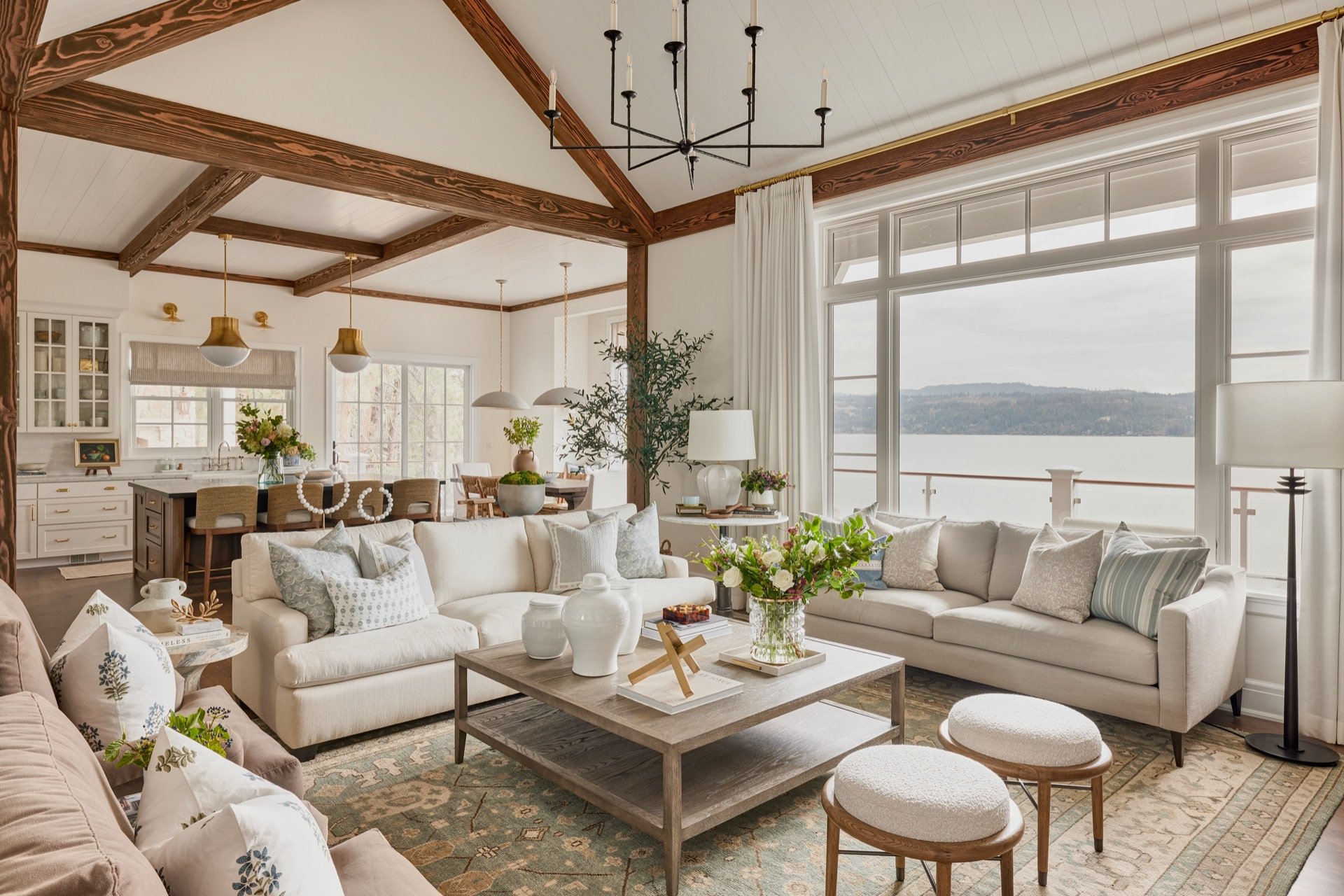
I always start with the floral or organic pattern, and the reason is practical: it's the most complex pattern you'll choose. A stripe can go with almost anything and a geometric is more flexible. But a large-scale floral is the base because it has a mood, a color story, a scale all its own. I like to pick this first and build the other patterns around it.

Layer 2: The Geometric or Stripe
This layer is so important because it gives the eye a place to land. Organic patterns can feel more random and the eye follows them but never quite settles. A stripe or geometric provides structure within the mix, which is what keeps multiple patterns from feeling chaotic.
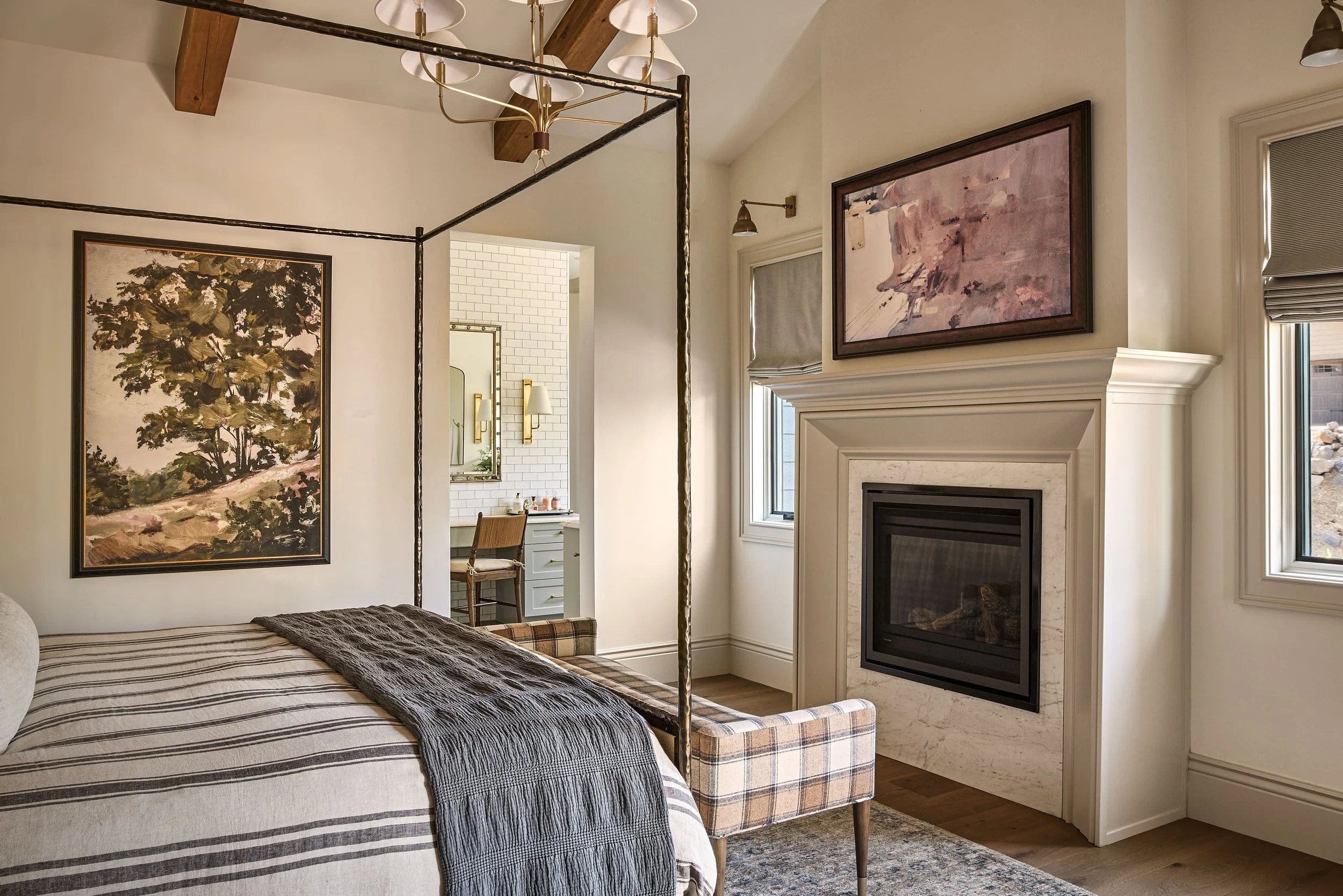
There's also a tension that happens between an organic pattern and a linear one that just works. They're opposites in the best way. The floral brings movement while the stripe brings order. Together they create a visual balance that neither could achieve alone.
Layer 3: The Texture or Small-Scale Pattern
This is the layer that makes the combination feel finished.
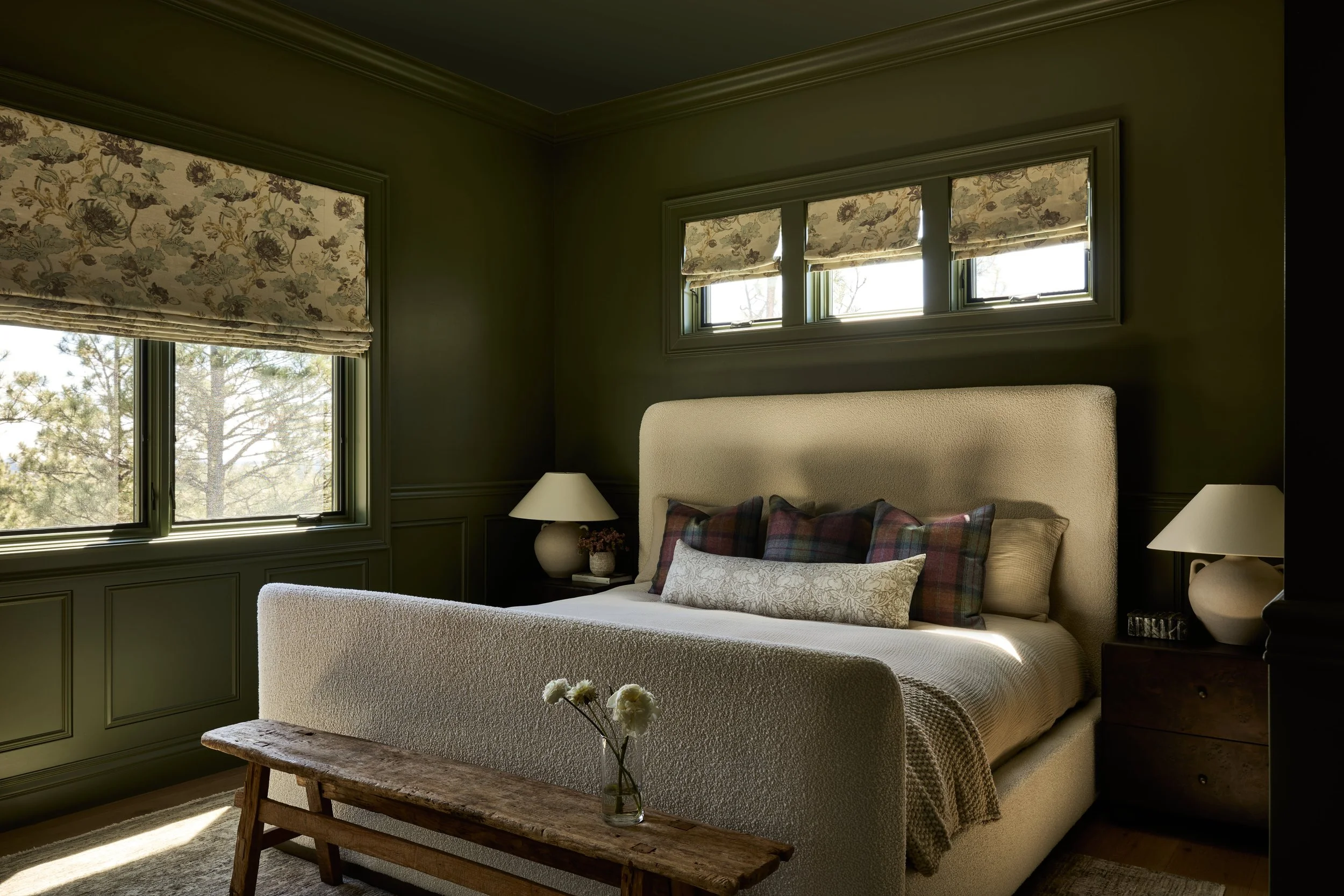
Texture functions differently than the other two layers. It's not there to be noticed but instead to add depth. A mohair, a woven, or even a small-scale geometric. Something that reads as a near-solid from across the room but has enough going on up close to keep the eye interested. It's what keeps the room from feeling loud. Two patterns alone tends to feel like something is missing. Three, with texture as the third, feels complete.
The Two Rules Behind the Formula
The formula works because of two rules I never break.
Vary the scale of your patterns. A large floral, a medium stripe, a small texture. If all three patterns are fighting for the same visual weight, it feels random and chaotic. Scale variation is what creates the hierarchy and the hierarchy is what makes it work.
The colors should belong to the same story. This doesn't mean every pattern shares the same color. It means the colors across all three layers feel like they understand each other. Nothing matches exactly, but nothing fights either.
Want This Done for You?
Pattern mixing is one of my favorite parts of the design process. When it comes together in a room, there's nothing like it.
If you want this done for your home, this is exactly the kind of project we live for - tell us about it here.